Buyers Guide: Selecting a Garment QC Inspection Service
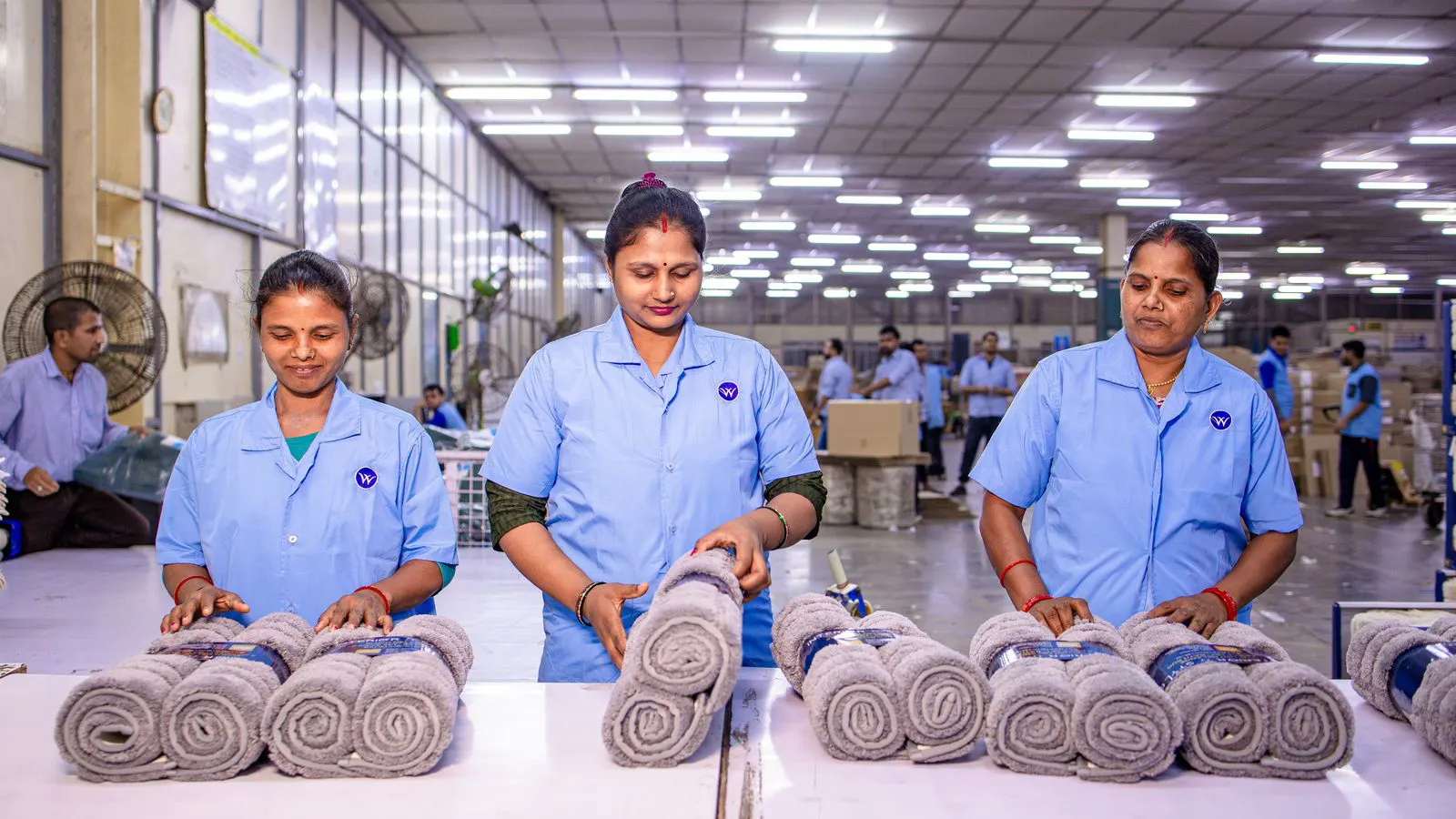
Selecting a QC inspection provider requires checking audit scope, reporting speed, staff credentials, and digital traceability. Compare providers against your risk tolerance, order volume, and destination market requirements before finalizing contracts.
- Define inspection scope by product type, order value, and destination market risk.
- Verify inspector credentials, factory access, and reporting turnaround before signing.
- Use sample inspections to test provider performance on your specific product lines.
- Prioritize digital reporting, photo evidence, and rework tracking over long-term relationships.
- Align inspection timing with production milestones to catch defects before shipment.
Third-party QC inspection turns a supplier’s word into documented proof. For apparel buyers, that proof covers fabric hand feel, stitching integrity, dimensioning, and colorfastness. It also covers packaging, labeling, and compliance with your destination market. Choosing the right provider is not about finding the cheapest audit. It is about matching the inspection service to your product complexity, risk tolerance, and logistics window.
What scope should your inspection cover?
Start with the product itself. A basic t-shirt in a standard color requires a different inspection than a technical jacket with three zippers, a waterproof membrane, and reflective piping. The more complex the construction, the more detail your inspection service must capture.
Define the scope by product category. A casual cotton tee needs checks for shrinkage, seam strength, and print registration. A structured blazer requires checks for shoulder balance, lapel symmetry, and buttonhole finish. A performance layer needs checks for seam sealing, zipper function, and fabric breathability.
Break the scope into three layers. First, product quality. This covers measurements, stitching, fabric appearance, and trims. Second, compliance. This covers labels, care instructions, fiber content, and any country-specific safety or chemical requirements. Third, presentation. This covers packaging, barcodes, and carton labeling. A provider that treats all three as an afterthought will miss defects that only appear in transit or on the sales floor.
For high-value orders, consider a multi-stage inspection. A pre-production inspection checks the sample against your technical pack. An in-line inspection samples finished goods during production. A pre-shipment inspection audits the final lot before loading. Each stage has a different cost profile. A single pre-shipment check is cheaper. A three-stage program catches defects earlier but adds labor and logistics.
How do you evaluate the provider’s audit methodology?
Methodology determines whether the report is useful or just a document. Ask how the provider selects samples. Random sampling from the production line is standard. But the sample size should match your order quantity and the defect risk. A provider that uses a fixed sample size for both a 500-piece order and a 50,000-piece order is not adjusting for risk.
Ask how defects are classified. Minor defects are cosmetic issues like a small loose thread or a faint mark that does not affect wear. Major defects are functional issues like a broken zipper, a large hole, or a color mismatch that fails the shade standard. Some providers use a third category for critical defects, such as a missing care label or a safety hazard.
The classification matters because it drives acceptance. If your buyer’s team defines a loose thread as major, the provider must be able to report it as such. If the provider uses a generic standard that lumps all cosmetic issues together, you lose control over the acceptance decision.
Ask about the measurement tools. For apparel, a tape measure is standard, but a digital caliper is useful for small dimensions like buttonhole width or zipper slider size. A colorimeter provides objective color data. A seam strength tester measures pull strength in newtons. If the provider relies only on visual checks and a tape measure, you are accepting more subjectivity than you may want.
What credentials and experience should you require?
Credentials matter, but factory exposure matters more. A certified inspector with ten years of office experience will miss a broken lockstitch that a floor inspector spots in seconds. Ask how many inspections the provider completes per year in your product category. Ask how many factories they audit annually. A provider that specializes in denim or knitwear will understand the specific failure modes of those fabrics.
Check the inspector-to-account ratio. If one inspector handles twenty active accounts, they will rush. If they handle three or four, they have time to walk the line and photograph defects. This ratio is not public. You must ask.
Ask for a sample report. A good report is not a list of pass and fail. It includes photos, lot numbers, defect counts, and a clear recommendation. It names the defect, its location on the garment, and the affected quantity. If the report reads like a generic audit, the provider is not building a record you can use for future negotiations.
How should you test providers before committing?
Run a sample inspection. Pick one order that is not your most critical shipment. Send the technical pack and the AQL standard to three or four providers. Let them inspect the same production lot. Compare the reports.
Look for consistency. If two providers find the same major defect and one does not, investigate. If one provider reports 40 minor defects and another reports 12, ask about their defect taxonomy. The gap is usually a methodology difference, not a quality difference.
Check reporting speed. Ask when the report will be delivered after the inspection. A 24-hour report is standard for most orders. A 48-hour report may be acceptable if your shipping window is wide. A 72-hour report is a red flag if the container is already booked.
Check communication. During the sample inspection, observe how the provider responds. Do they ask clarifying questions about your technical pack? Do they flag inconsistencies before the inspection? Do they provide a point of contact for the inspection day? The speed and quality of communication during the sample often predicts the quality of the relationship.
What technology and reporting features should you require?
Paper reports are disappearing. A digital report with photo evidence is now the baseline. Look for a portal that stores reports, photos, and correspondence in one place. A PDF attached to an email is acceptable for a one-off order. A portal is necessary if you are working with multiple factories and multiple product lines.
Ask about photo documentation. A report that says “color mismatch” without a photo is weak. A report that includes a side-by-side image of the garment and the shade standard is actionable. Ask if the provider can photograph defects in the context of the garment, not just a close-up of a loose thread.
Ask about rework tracking. If you request rework, the provider should be able to verify the fix. A rework inspection is a separate fee. A provider that bundles rework verification into the original contract is more convenient. A provider that charges a separate fee for each rework check is more transparent.
Ask about data export. If you manage sourcing across multiple categories, you will want to export inspection data into your ERP or sourcing tool. A CSV export is a minimum. An API is a plus. Without export, your data is trapped in a provider’s portal and hard to analyze over time.
How do you align inspection timing with production?
Timing is where most buyers lose money. An inspection that happens after the goods are packed is a compliance check. An inspection that happens before the goods are packed is a quality check. The difference is cost and use.
A pre-production inspection happens after the sample is approved. It checks the fabric, trims, and the first production units. It catches issues before the factory scales up. An in-line inspection happens during production. It samples finished goods as they come off the line. It catches defects before they accumulate. A pre-shipment inspection happens after production is complete. It audits the final lot. It confirms the shipment is ready.
For a 5,000-piece order, a pre-shipment inspection may be enough. For a 50,000-piece order with a new fabric, add an in-line inspection. For a first-time factory, add a pre-production inspection. The cost of catching a defect early is always lower than the cost of catching it late.
Decision checklist
- Define the inspection scope by product category and risk level.
- Confirm the provider’s sample size and defect classification method.
- Verify inspector factory experience in your specific product line.
- Request a sample report and evaluate photo evidence and clarity.
- Test three providers on the same production lot before signing.
- Confirm digital reporting, photo storage, and data export capabilities.
- Align inspection timing with production milestones and shipping windows.
- Agree on rework verification terms before the first order.
- Set a communication protocol for inspection day and report delivery.
- Review the first three reports for accuracy and usefulness before expanding.
Frequently asked questions
How many inspections should I schedule for a new factory?
Start with three inspections. A pre-production check, an in-line check, and a pre-shipment check. This gives you a baseline before the factory proves its process.
Can I use the same QC inspection provider for multiple factories?
Yes, but check if the provider has experience with each factory type. A provider that specializes in knitwear may not understand the construction of a structured blazer.
What is the difference between AQL and SPC in a QC inspection report?
AQL is a statistical sampling method. SPC is a process control method. AQL tells you if the lot meets a defect rate. SPC tells you if the process is stable. Most apparel buyers use AQL.
How long does a pre-shipment inspection take?
A standard inspection for a 5,000-piece order takes one to two days. A 50,000-piece order may take three to five days depending on the complexity and the number of inspectors.
Do I need a separate QC inspection for compliance?
Yes, compliance checks are a separate scope. A product quality inspection does not cover chemical limits or country-specific labeling. Add a compliance module to your scope.